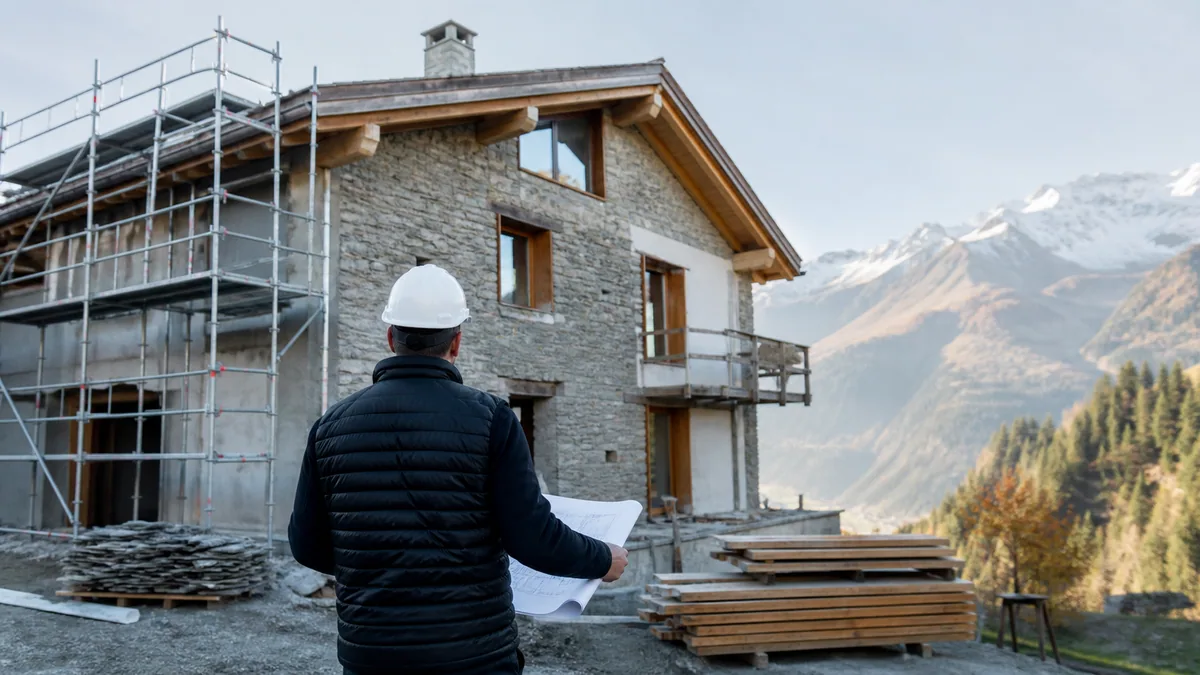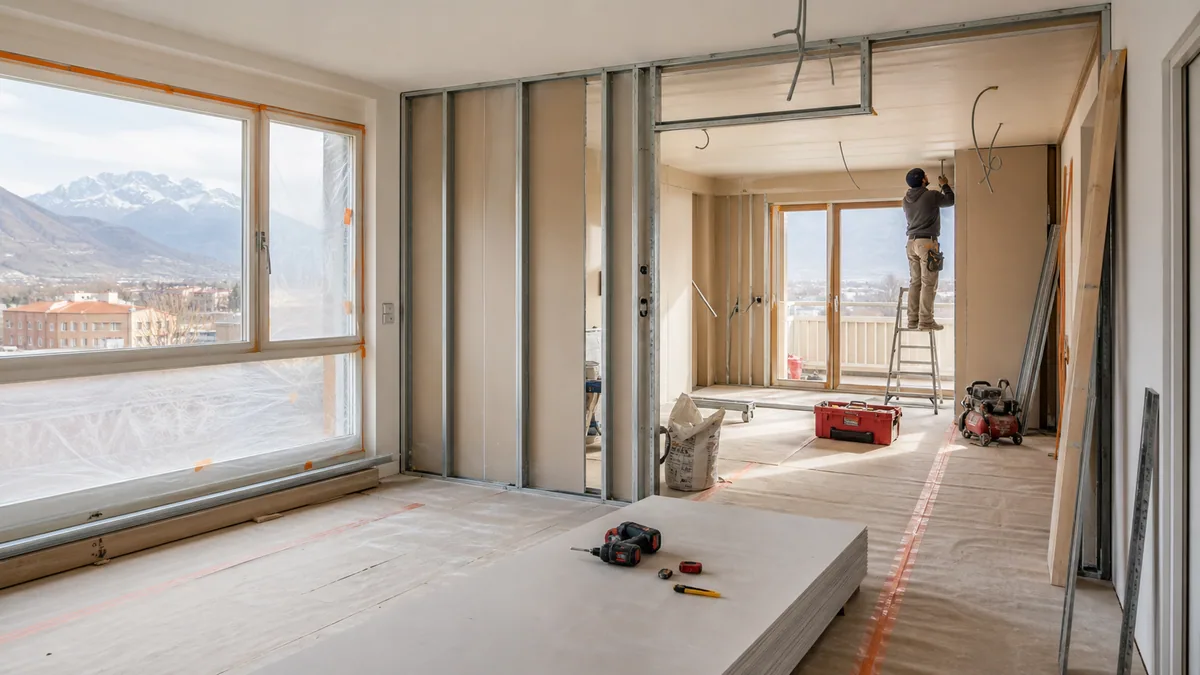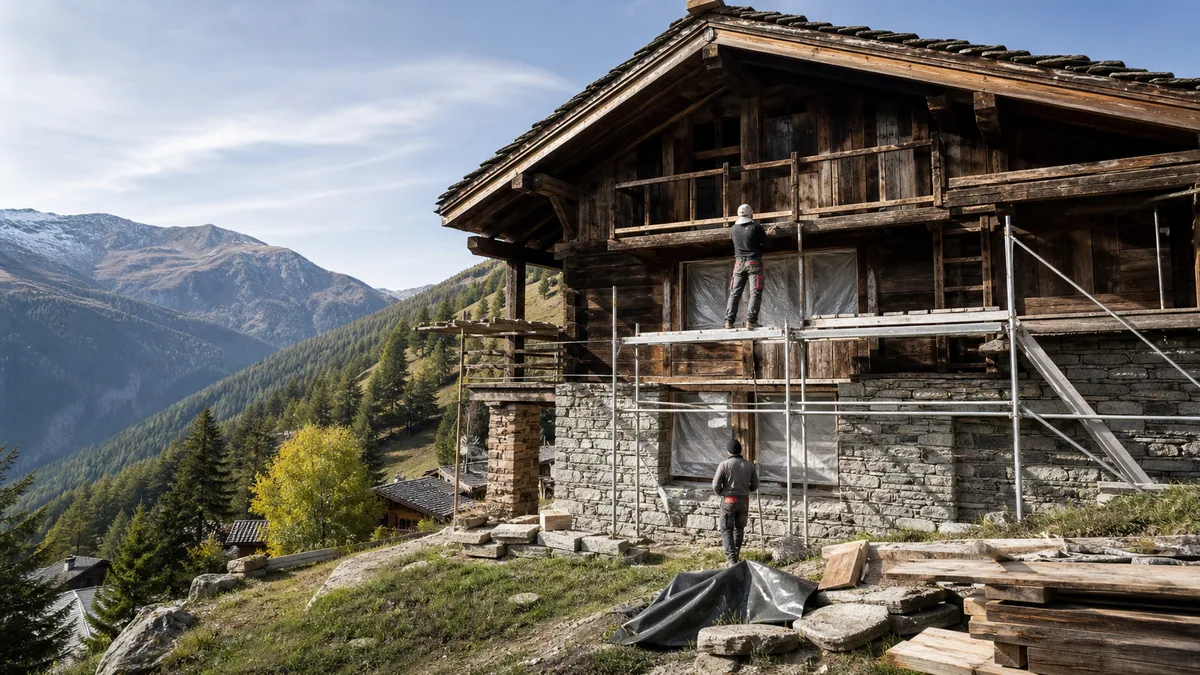
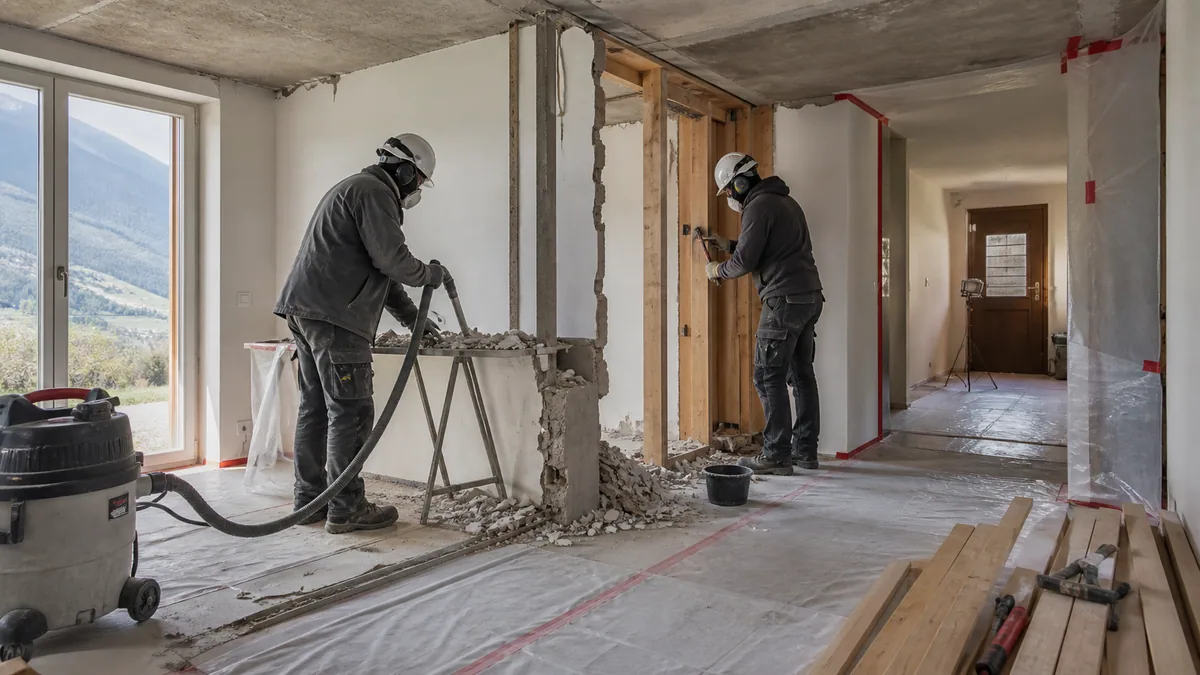
Interior demolition should not be treated as an isolated improvised step. It often prepares a renovation or transformation. The scope therefore follows the building, the affected elements, required protection and the next project stage.
Identify what is being removed
Distinguish partitions, finishes, equipment and other affected elements. Retained zones need equal clarity.
General and detailed photographs help describe the situation, while the intervention is confirmed only after the real context is reviewed.
Connect demolition to the transformation
Removal should prepare possible adaptations, structural work and future fit-out rather than creating an isolated result.
The quotation may treat demolition separately or as the first stage of a wider project, with boundaries stated in both cases.
Plan access and protection
Building access, retained-area protection and material movement affect the intervention, particularly in occupied properties or shared buildings.
The approach is adapted to the actual location and scope rather than applying one standard method.
Send a sufficiently clear enquiry
Provide the location, building type, affected elements, intended transformation, photographs and any plans.
Romande BTP can then assess whether demolition is a targeted intervention or part of connected stages.
Frequently asked questions
Does Romande BTP carry out every demolition request?
Each request is assessed according to the building, access and scope before an intervention is confirmed.
Can demolition form part of a complete renovation?
Yes. It may be the first stage before structural and finishing work.
What should be sent for an initial assessment?
The location, property type, affected elements, next project stage and photographs provide a useful basis.